
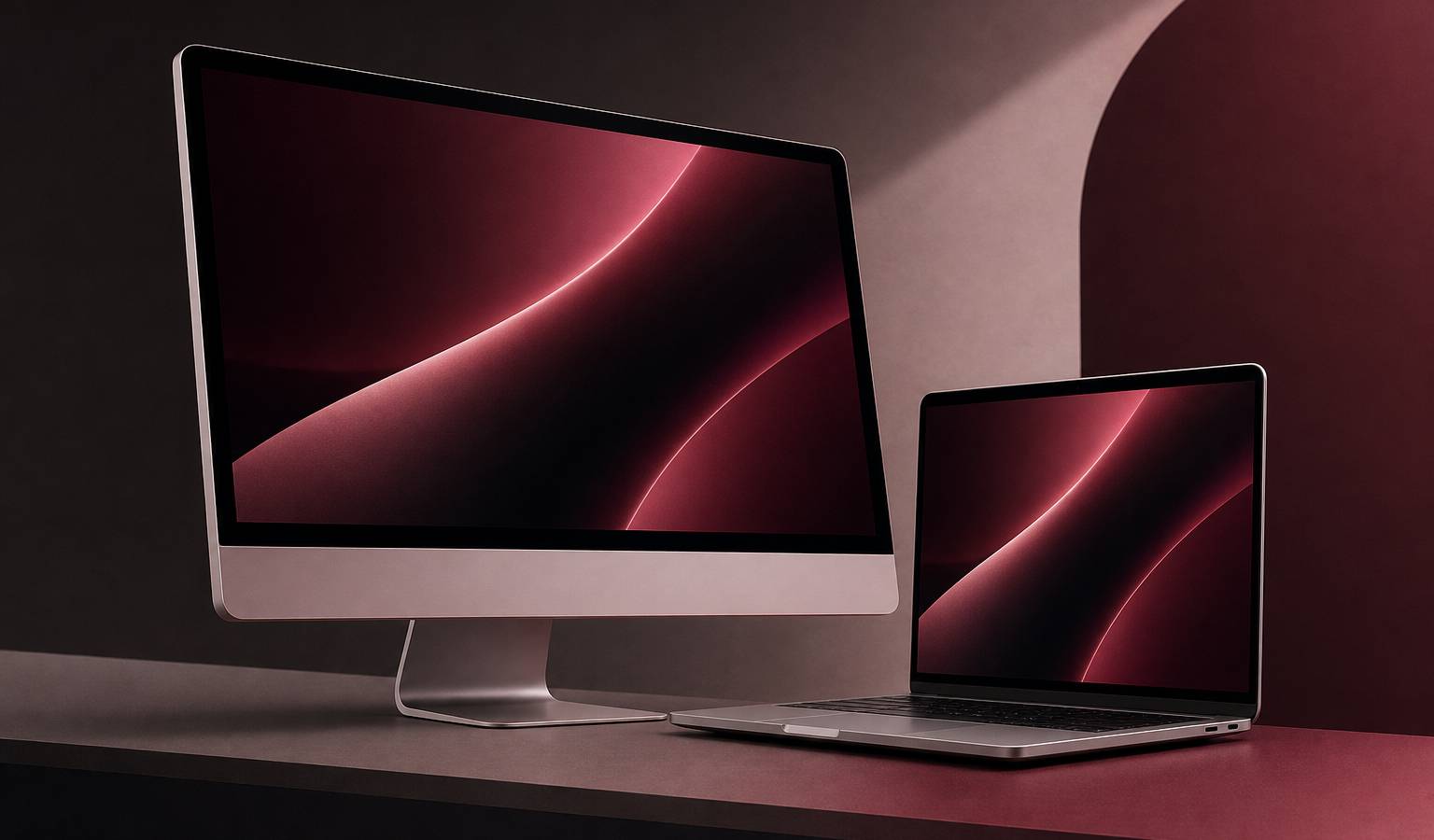
Apple has refreshed two of its desktop and laptop lines with the M6 chip, announcing a new iMac and a new 14-inch MacBook Pro. The updates focus on performance, on-device AI capabilities, and faster connectivity, according to Apple’s newsroom announcements and coverage from Ars Technica and TechCrunch. Together, the two product updates present a coordinated move that places Apple’s latest silicon at the center of its desktop and portable Mac lineup.
The new iMac is built around the M6 and is described by Apple as delivering even more performance and powerful AI capabilities. That wording underscores Apple’s emphasis on both speed and AI-related processing. Ars Technica’s coverage adds that the iMac refresh also includes Apple’s N1 chip, which brings Wi-Fi 7 and Bluetooth 6 support. In other words, the iMac update is not limited to a processor refresh; it also brings newer wireless technology into the mix.
Apple also introduced a new 14-inch MacBook Pro with M6. Apple says the machine brings more performance, powerful on-device AI capabilities, and faster connectivity. TechCrunch reports that the laptop offers 24 hours of battery life and support for Wi-Fi 7 and Bluetooth 6. That combination of claims places the laptop update in the same category as the iMac refresh: a blend of performance improvement, AI focus, and connectivity upgrades.
The move continues Apple’s recent pattern of updating its Mac lineup by pairing the M-series processors with newer connectivity features. In this round, the M6 sits at the center of both product updates, with Apple emphasizing both raw speed and AI-focused improvements. The company’s messaging also suggests that these upgrades are meant to be understood as part of a broader platform refresh rather than isolated hardware changes.
For readers following Apple’s Mac strategy, the two announcements are closely aligned. Apple is presenting the iMac and the 14-inch MacBook Pro as distinct products, but the language used in each update shares the same priorities. Performance appears first, followed by AI capabilities and improved connectivity, which gives the launch a unified structure across desktop and laptop categories.
What Apple highlighted in the iMac update
Apple’s iMac announcement is centered on the M6 chip and the promise of more performance. The company also frames the desktop as better suited for AI-driven tasks, using the language of powerful AI capabilities in its product description. That makes the update feel broader than a simple chip replacement, because the description links hardware changes to the kinds of workloads the machine is meant to support.
Ars Technica’s report adds the detail that the iMac refresh includes the N1 chip, which enables Wi-Fi 7 and Bluetooth 6. That combination suggests Apple is pairing chip upgrades with wireless connectivity improvements rather than limiting the announcement to processing power alone. The result is a desktop update that combines the M6 with a newer networking foundation.
Seen as a whole, the iMac refresh is presented as an update that touches both core performance and external connectivity. Apple’s description focuses on the M6, but the surrounding coverage makes clear that wireless support is also part of the story. That makes the iMac one of the two products in this round of announcements that reflects Apple’s broader emphasis on speed, AI, and modern standards.
What is new in the 14-inch MacBook Pro
The 14-inch MacBook Pro has also been updated with M6, and Apple positions the notebook around performance, on-device AI, and faster wireless support. TechCrunch notes that the new model includes 24 hours of battery life, while Apple’s own announcement highlights its improved connectivity. The update therefore combines portable design with Apple’s latest chip and a connectivity bump that matches the direction of the iMac refresh.
For buyers watching Apple’s laptop lineup, the announcement is notable because the 14-inch model remains the entry-level MacBook Pro. The refresh keeps that model aligned with Apple’s latest silicon while extending the same focus on AI readiness and wireless standards seen in the iMac update. That alignment matters because it shows Apple applying the same design priorities across two different categories of Mac.
The 14-inch MacBook Pro’s place in the lineup also helps explain why the announcement draws attention. As the entry-level MacBook Pro, it serves as a point of comparison for users who want a laptop in the Pro family without moving to a larger model. The M6 update keeps that position current with Apple’s latest chip generation while matching the rest of the refresh theme.
Why these updates matter
Apple’s latest Mac announcements show how the company is tying together processor changes and platform features. The M6 is not presented as a standalone speed bump. Instead, Apple links it to AI workloads and updated wireless support, giving both the iMac and MacBook Pro a broader feature refresh. That framing makes the update feel like a coordinated step rather than a narrow component change.
That approach also makes the two products easier to compare. Both now emphasize M6, performance, AI, and connectivity, but they serve different buyers: the iMac as an all-in-one desktop and the 14-inch MacBook Pro as a portable laptop with a longer battery life claim. The shared feature set creates a common story while preserving the differences between desktop and notebook use.
The announcement also shows how Apple is presenting its newest chip in practical terms. Rather than discussing the M6 only in isolation, the company is attaching it to the specific benefits that appear in each product. On one side is the iMac, which gains the M6 and, according to Ars Technica, the N1 chip with Wi-Fi 7 and Bluetooth 6. On the other side is the 14-inch MacBook Pro, which Apple says brings more performance, powerful on-device AI capabilities, and faster connectivity, with TechCrunch adding the battery life and wireless details.
Conclusion
Apple’s latest Mac refresh brings the M6 to both the iMac and the 14-inch MacBook Pro, with the company emphasizing performance, on-device AI capabilities, and newer wireless features. With Wi-Fi 7 and Bluetooth 6 joining the mix, the updates suggest Apple is treating the M6 launch as both a silicon upgrade and a broader platform refresh.