
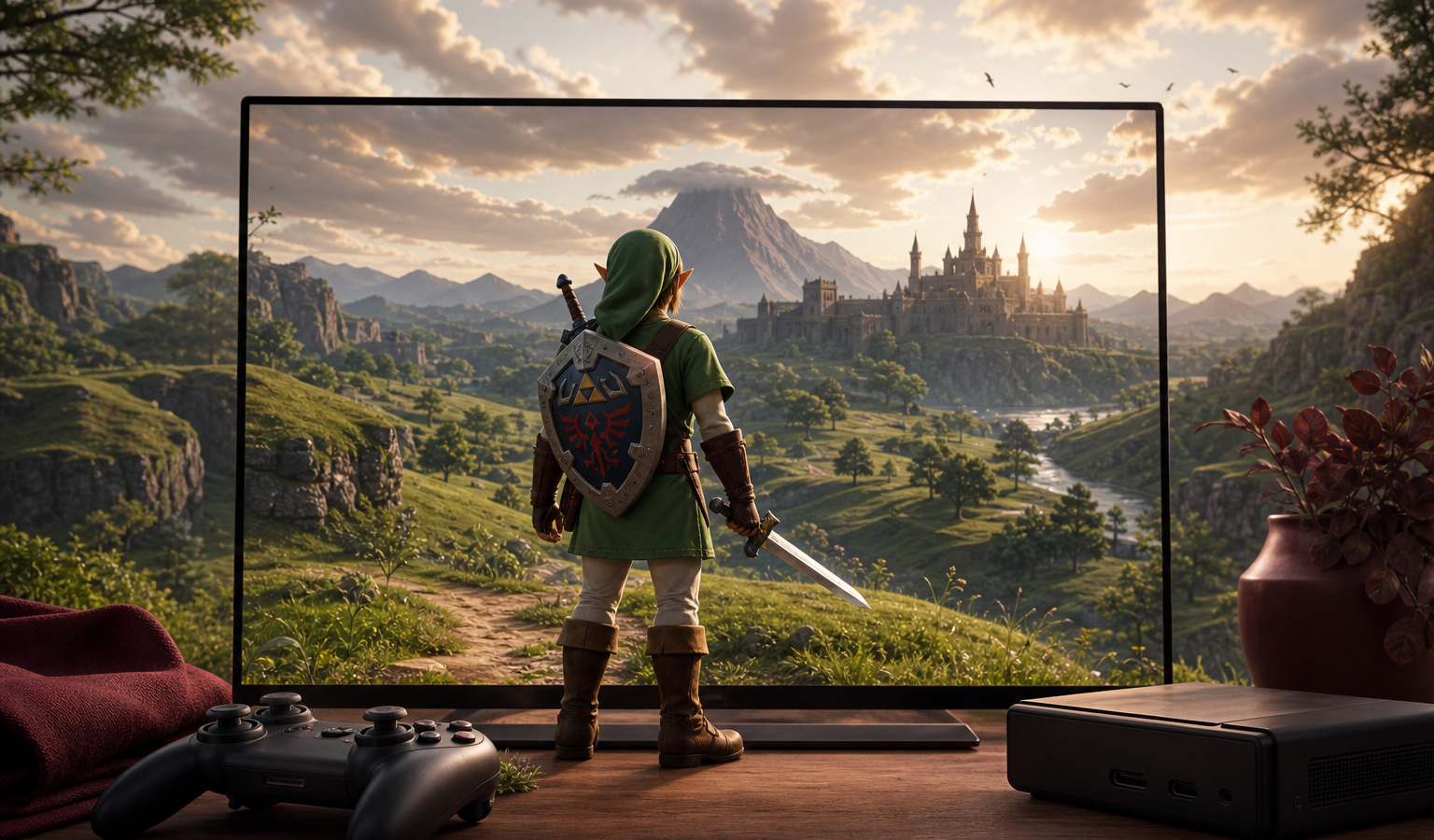
The Legend of Zelda: Ocarina of Time has long held a special place in gaming history, and its new Switch 2 remake arrives with a familiar challenge: how do you update a classic without losing what made it matter in the first place? Based on the supplied coverage, the answer is a careful blend of preservation and refinement. The remake keeps the game’s core identity intact while giving it a modern visual style and several updates designed to make it feel more contemporary.
A Classic Returns in a New Form
The remake is presented as arriving 28 years after the launch of the original Nintendo 64 version. That distance matters because Ocarina of Time is not being treated like a simple nostalgia project. It is being positioned as a major release for Nintendo’s current hardware, with a more realistic visual style and a handful of modern improvements. Those additions include a jump button, a way to sprint, full voice acting, and a feature called Threads of Time that helps players keep track of progress.
Even with those changes, the remake appears committed to remaining faithful to the classic release. The coverage emphasizes that many elements are still expected to feel close to the original game, suggesting that the new version is not trying to reinvent the experience so much as make it more accessible and visually updated for a new audience.
Preserving the Feel of the Original
What stands out in the supplied material is the balance between novelty and familiarity. The remake may look and feel more modern, but its appeal still rests on the strength of the original design. Engadget describes the game as a masterpiece reborn, noting that the magic of the original remains fully intact while the game looks and plays better than ever. That framing makes the remake sound less like a replacement and more like a renewal.
The Verge’s coverage reinforces that idea by focusing on the game’s enduring status. Rather than treating Ocarina of Time as an artifact from the past, the article presents it as a title that still deserves attention because it can stand on its own in the present. That is an important distinction for a remake of this kind: the goal is not merely to preserve history, but to prove that the game’s structure and atmosphere still work today.
Why Ocarina of Time Still Matters
The supplied Verge material also places the remake in a larger series context. It contrasts the more traditional, linear Zelda structure with the open-ended philosophy that later became central to the franchise through Breath of the Wild. That game changed the series by emphasizing player freedom and expression, allowing players to approach challenges in different ways and even author creative solutions in later titles such as Tears of the Kingdom and Echoes of Wisdom.
Against that backdrop, Ocarina of Time represents an earlier era of Zelda design, one built around a more guided path. The fact that it is being remade now suggests that Nintendo still sees value in revisiting that older style. Rather than being overshadowed by newer entries, Ocarina of Time is being reintroduced as a game whose structure, pacing, and atmosphere continue to have appeal.
Modern Touches, Familiar Adventure
The remake’s new features are notable precisely because they seem designed to support, not overpower, the original game. A jump button and sprinting are practical additions. Full voice acting changes the presentation without changing the fundamentals of play. Threads of Time adds a progress-tracking tool that fits the expectations of modern players. Together, these changes suggest a remake that wants to smooth friction while preserving the classic adventure beneath it.
That approach is consistent with the broader description of the game as a faithful remake with a more realistic visual style. It does not sound like Nintendo has attempted to transform Ocarina of Time into something unrecognizable. Instead, the game seems to be walking a line between respecting the original and making sure it can still feel relevant on current hardware.
A Legacy That Endures
The real story of this remake is not simply that a famous game has returned. It is that Ocarina of Time still carries enough weight for a modern release to be built around it. The supplied coverage treats the game as both a historical landmark and a living experience. That combination explains why the remake is being discussed with such attention: it is not just about revisiting the past, but about testing whether a classic can still speak clearly in the present.
If the supplied reviews and coverage are any indication, the answer is yes. The remake preserves the magic that made Ocarina of Time memorable while adding enough modern refinements to make the experience feel current. In doing so, it offers a reminder that some games do not lose their relevance simply because technology moves on. They endure because their design, mood, and sense of adventure remain compelling across generations.
Conclusion
The Legend of Zelda: Ocarina of Time remake appears to succeed by keeping the heart of the original intact while updating its presentation and playability for a new era. Its modern visual style, added features, and faithful approach all point to a project that respects what came before. More than a remake, it reads like a reaffirmation of why the game mattered in the first place.
Sources
- The Verge review: The Legend of Zelda: Ocarina of Time never gets old
- Engadget review: The Legend of Zelda: Ocarina of Time review: A masterpiece reborn
- The Verge coverage: All the news about The Legend of Zelda: Ocarina of Time remake