
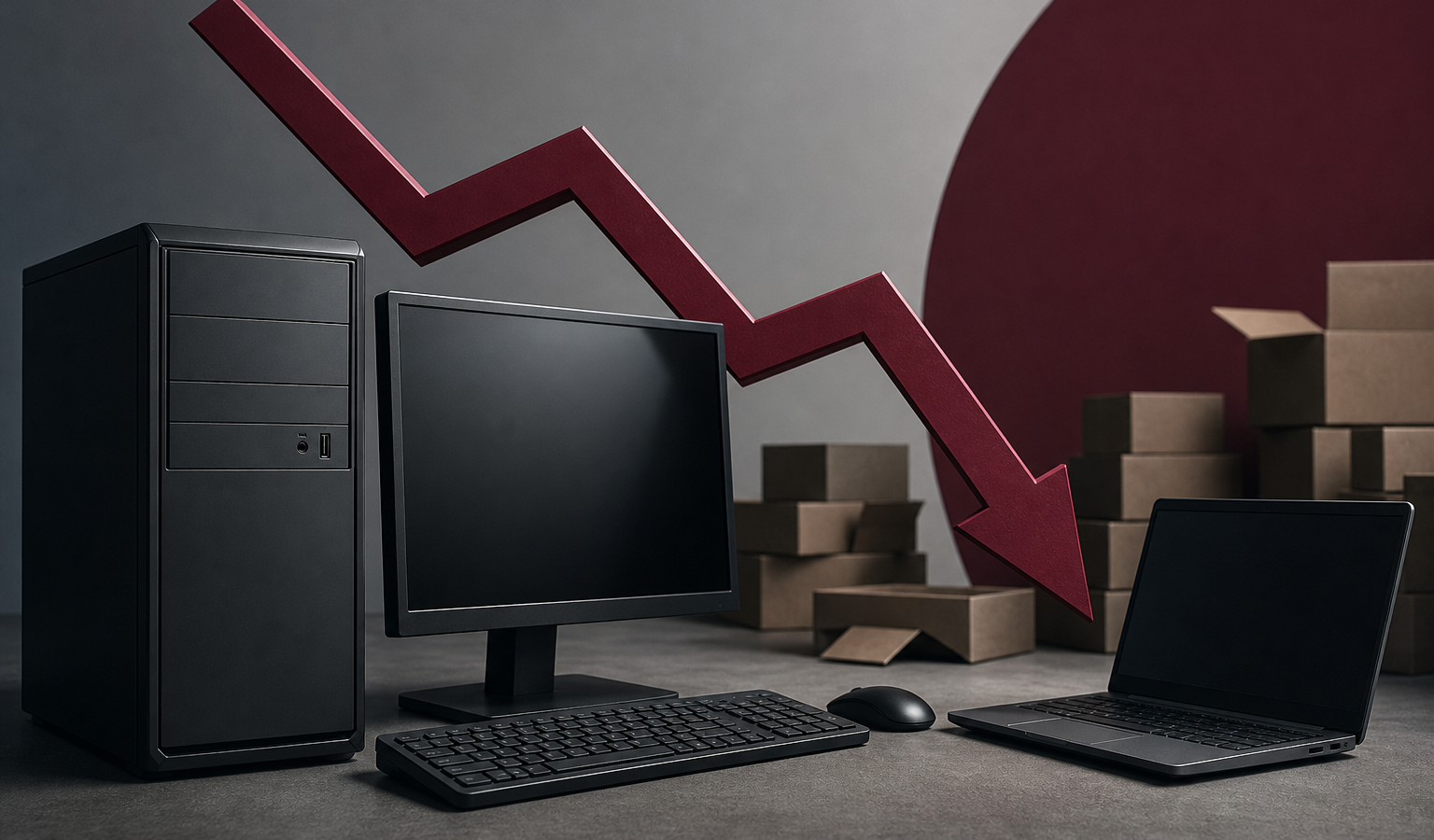
Global PC shipments took a sharp turn downward in Q3 2026, marking a notable reversal after a period of steady growth. According to Counterpoint Research, shipments fell 21 percent year over year, and the decline arrived after more than two years of growth that had continued through Q2 2026. The drop suggests that demand for new PCs has been affected by a tougher cost environment across the hardware supply chain.
What makes the Q3 2026 result stand out is not only the size of the decline, but the fact that it came after an extended stretch of expansion. For more than two years, PC shipments had been moving in the opposite direction, so the latest numbers point to a meaningful shift in market conditions rather than a small seasonal move. The change also fits into a broader pattern of rising pressure on hardware buyers and sellers alike.
What the latest shipment data shows
The central figure in the latest reporting is the 21 percent year-over-year decline in global PC shipments during Q3 2026. The Verge reports that this finding from Counterpoint Research is consistent with earlier reporting from IDC and Omdia. Engadget likewise describes the market as plunging more than 20 percent from last year. Together, those reports point to a broad slowdown rather than a minor quarterly dip.
The shipment decline is especially notable because PC sales had been rising for more than two years before this quarter. That growth streak makes the Q3 result stand out as a clear change in direction, rather than a routine seasonal fluctuation. In other words, the numbers reflect a break from the recent pattern that had defined the market through Q2 2026.
Because the data spans the global market, the decline is not limited to a single brand, product type, or region in the reporting provided. Instead, it suggests that the downturn is affecting the category at a broad level. The contrast with the prior two years of growth makes the shift even more pronounced in context.
Why prices matter
Counterpoint linked the slowdown to higher component prices. The Verge reports that RAM, SSDs, and chips from Intel, AMD, and Qualcomm have all become more expensive over the last several months. Those increases have fed through to device pricing, affecting products ranging from MacBooks to Raspberry Pis.
When core parts become more expensive, manufacturers have less room to absorb costs. That can lead to higher sticker prices for finished systems, which in turn can make shoppers delay upgrades or stick with older machines for longer. The reporting does not claim a single cause for the decline, but it does identify pricing pressure as the main factor cited by Counterpoint.
That link between components and final device prices matters because the PC market depends on a chain of parts and assembly costs that can move quickly together. If memory, storage, and chips all rise at once, the effect can spread across many kinds of devices. The reporting specifically connects those increases to broader pricing pressure in the market.
The wider hardware picture
The PC market is not the only part of the device ecosystem feeling the strain. The Verge notes that smartphone shipments also hit a 14-year low in the same quarter. While the sources focus on PCs, that parallel downturn suggests that rising component costs and softer demand may be affecting multiple categories at once.
For PC buyers, the immediate implication is simple: the cost of upgrading may be rising at the same time that shipment volumes are falling. For the industry, the data points to a market that shifted quickly from expansion to contraction in a matter of months. That combination can put pressure on both sales plans and pricing strategies.
The broader picture is one of a hardware market facing simultaneous challenges. Even though the reporting centers on PC shipments, the smartphone data helps show that the quarter was difficult beyond one product segment. As a result, the Q3 2026 figures are being read as part of a wider slowdown in device demand.
What happens next
Engadget notes that the decline could reach 27 percent through the end of 2026 if prices keep rising. That projection is not a guarantee, but it shows how sensitive the market may be to component pricing over the remainder of the year.
If costs remain elevated, vendors may continue to face a difficult balancing act between preserving margins and keeping systems affordable enough to support demand. For now, the latest shipment figures show that the PC market has moved from a multi-quarter growth phase into a period of sharp pressure. The trajectory from here will depend in large part on whether component prices stabilize.
Even without projecting beyond the supplied reporting, the message is clear: pricing has become a key variable in market performance. A continued rise in component costs would make it harder for the industry to reverse the downturn quickly.
Conclusion
The Q3 2026 PC shipment numbers highlight how quickly the market can change when input costs rise. A 21 percent year-over-year drop, following more than two years of growth, indicates that demand has been hit hard by higher prices for memory, storage, and chips. Whether the downturn deepens will depend on how long those cost pressures persist.
For now, the combination of a steep shipment decline, longer-term growth before Q3, and rising component prices paints a clear picture of a market under strain. The latest figures do not point to a brief interruption, but to a meaningful reversal that is tied closely to the cost environment facing hardware makers and buyers.