
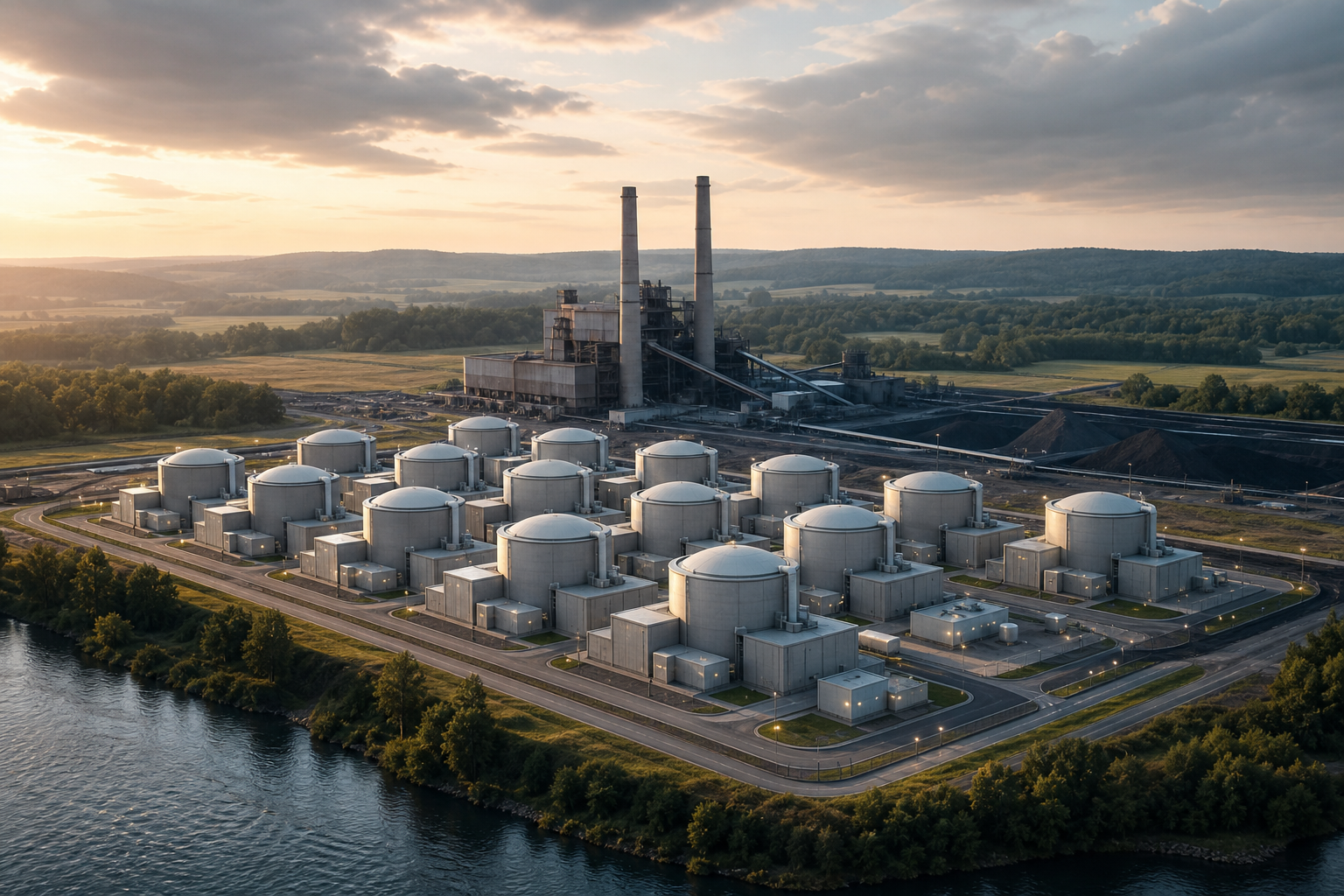
Amazon has signed an agreement with X-energy and American Electric Power to help fund a new nuclear energy facility in Indiana, according to reports from TechCrunch and The Verge. The project would be built at the site of the now defunct coal-fueled Breed Generating Station in Fairbanks, Sullivan County, marking a major shift from coal generation toward nuclear power. The agreement places Amazon alongside two energy partners in a project that is being framed as an important new step in nuclear deployment for electricity generation.
The proposed facility is designed to provide carbon-free electricity for both the regional power grid and Amazon’s data centers. The Verge reports that the plant is targeting up to 960 megawatts of carbon-free energy, while TechCrunch says the deployment is expected to generate nearly 1 gigawatt of electricity. Both reports describe the agreement as another step in Amazon and X-energy’s broader push to deploy nuclear power to the grid, underscoring the scale of the project and its intended role in the energy system.
What the Indiana project includes
According to the supplied sources, the Indiana facility is expected to use 12 Xe-100 small modular reactors. TechCrunch describes the project as a deal to deploy nuclear power to the grid, while The Verge says Amazon has signed an agreement with X-energy and American Electric Power to fund the building of the facility. The plan would replace a former coal plant with a new source of carbon-free generation, making the location a symbol of a broader energy transition.
The project’s reactor count and output are central to how it has been presented. A facility built around 12 Xe-100 SMRs and designed to reach up to 960 megawatts would represent a substantial addition to the region’s power infrastructure. At the same time, it would align with Amazon’s stated interest in securing long-term electricity supplies that can support both grid demand and data center operations.
The Verge also reports that, although the project is moving forward, no timeline for construction or operation has been announced. It adds that Amazon says the project could create 1,000 construction jobs and 100 permanent roles. The same report notes that the facility is still years away from completion, which means the agreement currently represents a plan rather than an operating energy site.
Why this matters for energy and computing demand
The project connects two large infrastructure needs: electricity generation and data center demand. Amazon’s involvement suggests the company is seeking long-term energy capacity that can support its data center operations while also contributing power to the grid. The reported size of the facility, up to 960 megawatts, indicates that the project would be a large addition to the region’s electricity supply, with implications for both industrial-scale computing and regional energy planning.
At the same time, the use of 12 Xe-100 small modular reactors highlights how nuclear energy is being positioned as part of future grid planning. The sources describe the reactor design as advanced, though unproven, and indicate that the Indiana site is intended to be a significant deployment of that technology. That combination of scale and design places the project among the more notable nuclear energy proposals currently being discussed.
Because the project is aimed at both the regional grid and Amazon’s data centers, it reflects a two-part energy strategy. On one hand, it could add carbon-free electricity to the broader market. On the other, it could give Amazon a dedicated pathway toward meeting data center power needs with a source that is not dependent on fossil fuels. The reporting suggests that this is part of a wider effort to match digital infrastructure growth with new supply resources.
What is known so far
Based on the supplied reporting, the core details are clear: Amazon, X-energy, and American Electric Power have agreed to fund a nuclear facility in Indiana; the site is the former Breed Generating Station; the project targets 12 Xe-100 SMRs; and the plant is expected to deliver up to 960 megawatts of carbon-free energy. Those points form the basis of the announcement and define the project as it is currently being described.
What remains unclear is the schedule. Neither report includes a construction start date or an operating date. For now, the Indiana project stands as a significant announced plan rather than a completed energy facility. The absence of timing details leaves open how quickly the project can move from agreement to construction and then to operation.
Even with those unknowns, the reporting shows that the project is being treated as a major development. Its location at a former coal site, its proposed use of 12 small modular reactors, and its intended output all point to a facility that would be substantial in scope if completed. The emphasis in both reports is on the agreement itself and the scale of the planned deployment.
Conclusion
The Indiana agreement adds another high-profile nuclear energy project to Amazon’s energy strategy. By backing 12 small modular reactors at a former coal plant, the company and its partners are aiming to turn an old fossil-fuel site into a large carbon-free power source for the grid and for data centers. The project is notable not only for its scale, but also for the way it reflects growing interest in nuclear power as a future-facing energy option.
For now, the project is defined by the details that have been announced: the partners involved, the site, the reactor count, and the planned power output. With no construction or operation timeline yet announced, it remains a proposed facility with major ambitions rather than a finished source of electricity. Even so, it stands out as a significant example of how Amazon is approaching the intersection of energy supply, computing demand, and carbon-free generation.