
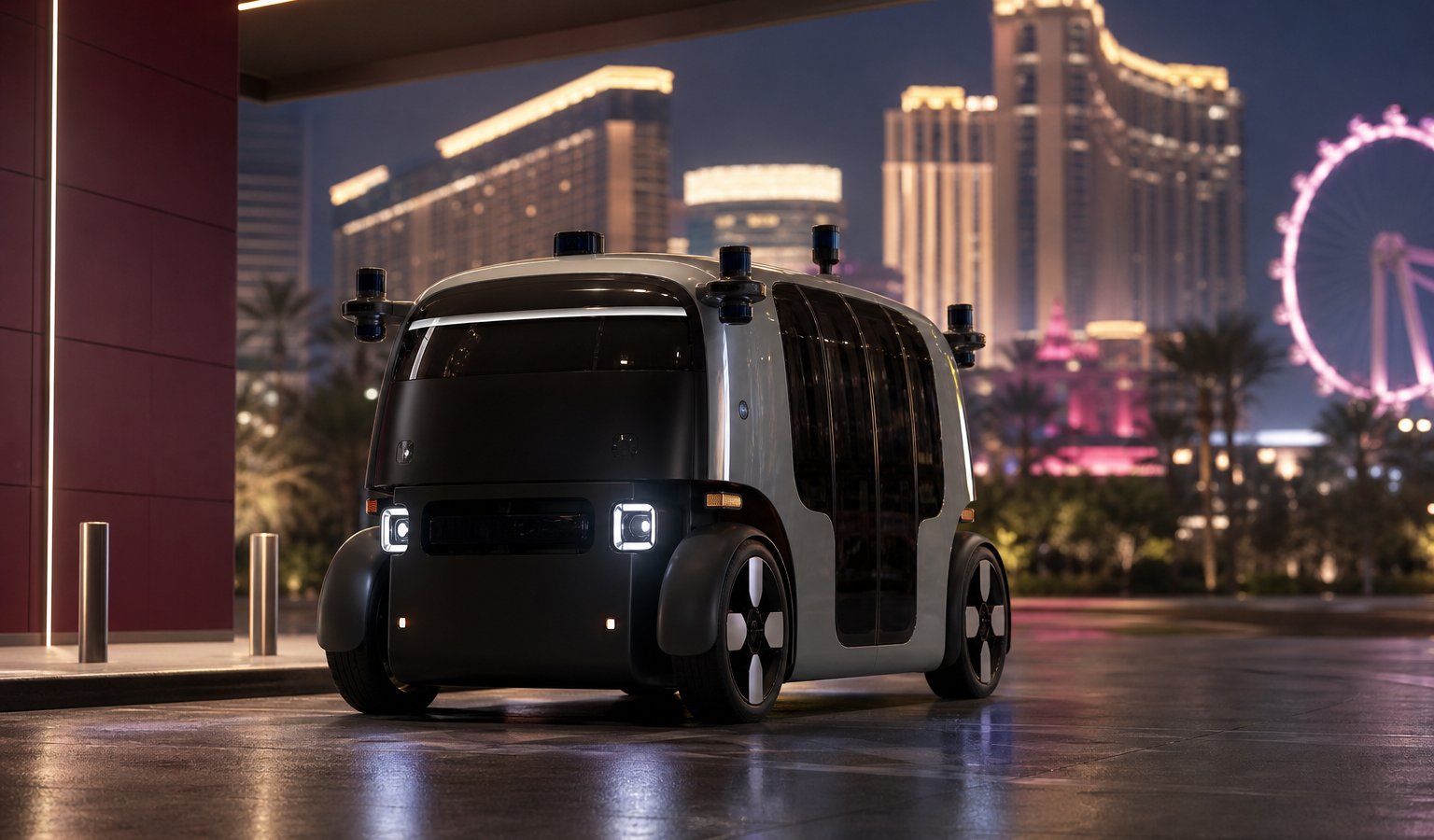
Uber riders in Las Vegas now have a new autonomous vehicle option through the Uber app: Amazon-owned Zoox robotaxis can be matched as part of regular ride requests. The rollout brings together two companies that have not previously worked in this way, and it marks a new step for both sides of the partnership. For riders, it means a robotaxi can now appear inside a familiar app they already use. For the companies involved, it creates a new model for how purpose-built autonomous vehicles can be distributed to the public.
The launch is notable because it places Zoox inside Uber’s existing ride-hailing ecosystem rather than asking riders to use a separate service. In a city where transportation options are already varied, the addition gives Uber users another way to encounter autonomous vehicles without changing how they request a trip. The reports describe this as a first for both companies: Uber is adding a purpose-built, steering-wheel-free autonomous vehicle to its network, and Zoox is opening its fleet to a third-party app.
What the new Uber-Zoox pairing means
According to the reports, this is the first time Uber has added a purpose-built, steering-wheel-free autonomous vehicle to its network. It is also the first time Zoox has opened its fleet to a third-party app. That makes the Las Vegas launch a notable expansion of how riders can access robotaxis through a mainstream ride-hailing platform. The pairing is therefore more than a simple fleet addition; it is a new distribution channel for a vehicle designed specifically for autonomous service.
Uber says riders requesting UberX, Uber Comfort, Uber Electric, Uber Comfort Electric, or Wait & Save in Las Vegas can be matched with a Zoox at no extra charge. That detail matters because it places the option within existing product categories rather than introducing a separate or premium-only path. The pairing is positioned alongside Uber’s other autonomous vehicle partnerships, showing that the company is continuing to widen the kinds of AVs available to its users. For riders, the experience stays embedded in the standard app flow, which may make the change feel more seamless than a standalone robotaxi service.
The fact that Zoox is now available through Uber also underscores the way ride-hailing platforms can act as distribution layers for autonomous vehicles. Instead of requiring riders to learn a new interface or sign up for a different app, the service is being surfaced through a product many people already know. That makes the launch meaningful not only as a partnership announcement, but also as a sign of how autonomous mobility may be introduced to wider audiences.
Why Las Vegas is the starting point
The launch begins in Las Vegas, where Uber riders can now encounter Zoox vehicles through regular trip requests. The reports do not say the rollout is limited to a special app mode or a separate booking process; instead, the robotaxis are integrated into standard Uber ride options already familiar to users. That integration is central to the launch, because it means the service is not being treated as a niche experiment inside the app. It is being presented as part of normal use.
Las Vegas is therefore the starting point for a partnership that could help shape how autonomous vehicles are introduced through mainstream transportation apps. For now, the rollout is described in city-specific terms, with no indication in the supplied material that the service has expanded beyond that market. The focus remains on a single, clearly defined launch area where Uber riders can be matched with Zoox vehicles in the same way they would request other ride types.
Zoox is known for its purpose-built robotaxi design, and the partnership highlights that form factor as part of the service. Because the vehicles are steering-wheel-free and bidirectional, the launch stands out from partnerships that rely on more conventional vehicle layouts. That distinction gives the Las Vegas rollout a different character from standard autonomous car deployments, since the vehicle itself is designed around autonomous operation from the start.
The combination of Las Vegas and Zoox’s design also helps explain why the launch has drawn attention. A purpose-built autonomous vehicle inside a mainstream ride-hailing app creates a clear example of how future mobility services could be delivered. Rather than being limited to test rides or separate pilot programs, the service is offered through a consumer-facing platform already built for everyday trips.
A broader sign of robotaxi distribution
The move suggests that autonomous ride services are becoming easier to access through consumer apps already used for everyday transportation. Rather than requiring a separate platform, the Zoox fleet is being made available through Uber’s existing network in one city, which could make the service easier for riders to try. That shift matters because access, not just technology, often determines how quickly new mobility services spread.
For Uber, the addition expands the company’s roster of autonomous vehicle options. The company has been building a broader AV presence, and the inclusion of Zoox fits into that pattern by widening the set of services available to riders. For Zoox, it is a first step into third-party ride-hailing distribution, which may help introduce its robotaxis to more riders in a familiar setting. The partnership therefore works in both directions: Uber gains another autonomous vehicle option, while Zoox gains a new path to riders who may not otherwise encounter its fleet.
Because the service is being introduced through a well-known app, it may also reduce the friction that can come with new transportation technology. Riders do not need to learn new terminology or adopt a new booking system. They can simply request one of the eligible Uber products in Las Vegas and, according to the reports, be matched with a Zoox at no extra charge. That simplicity is part of what makes the launch significant.
Conclusion
The Las Vegas launch shows how robotaxi access is starting to blend into regular ride-hailing use. With Zoox now available through the Uber app, the partnership creates a new route for riders to reach autonomous vehicles without leaving the platform they already use. It is a first for both companies, and it signals a broader way that purpose-built autonomous vehicles may be offered to everyday riders going forward.