
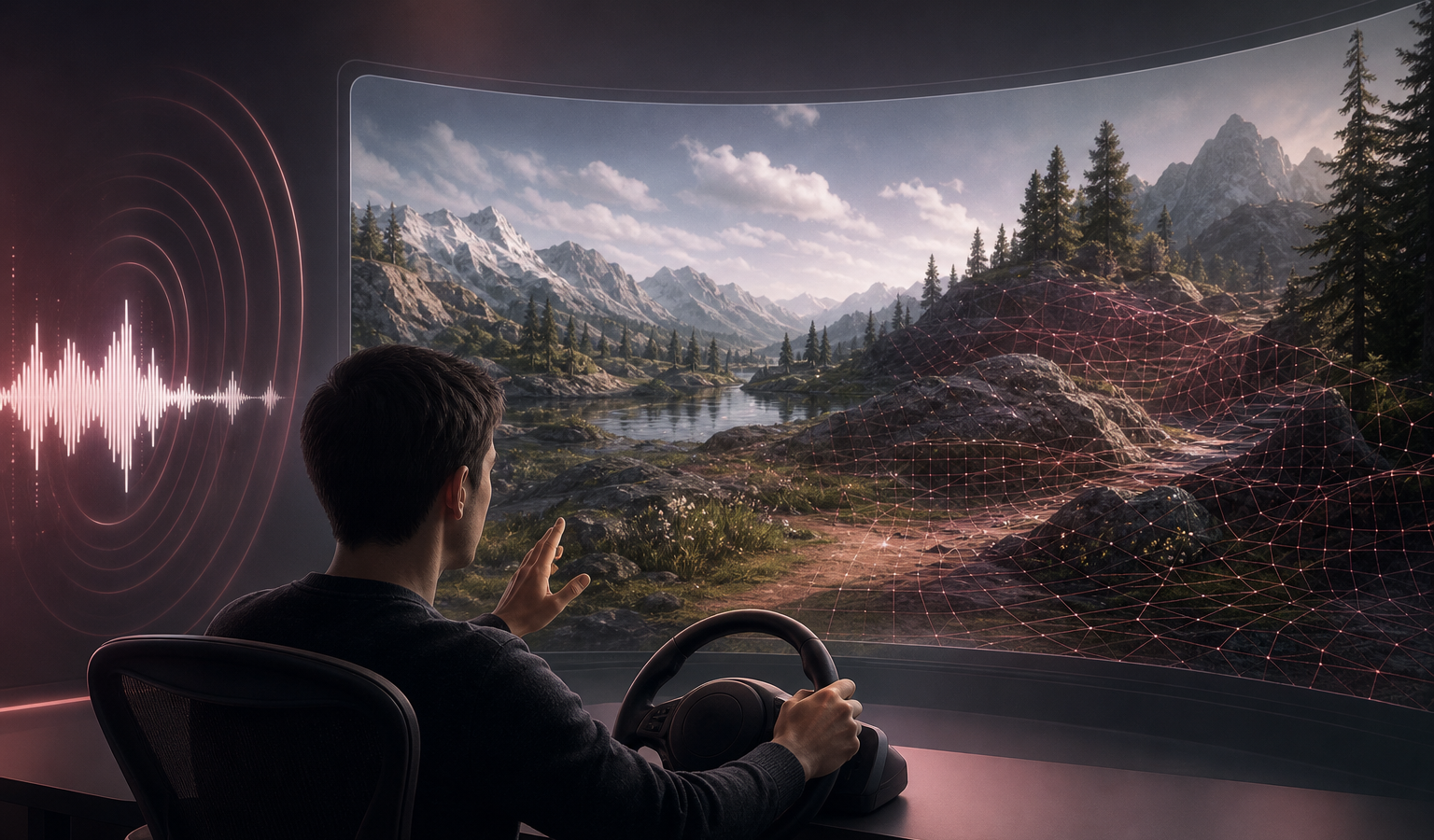
Google’s Genie 4 Adds Audio, Real-Time Steering, and More Realistic Worlds
Google DeepMind has introduced Genie 4, the latest version of its world model for generating interactive experiences. The new model is being released in research preview for trusted testers, and it expands what the system can do during a simulation. According to the reporting, Genie 4 adds audio generation, more realistic environments, and the ability to update an experience with new text prompts while it is still running.
The update is a notable step because it does more than simply refine visuals. It changes how the experience behaves while it is underway. Rather than functioning as a static demo, Genie 4 is designed to let users interact with a simulation as it unfolds, which makes the model feel more dynamic and more responsive to input.
What Genie 4 adds
The most visible change in Genie 4 is that it can generate audio alongside its visual output. The model also aims to produce more realistic worlds, with stronger simulation of both physics and human figures. Another major addition is real-time steering: users can change an experience mid-simulation by entering a natural language prompt.
The Verge reports that Genie 4 is built to create interactive experiences that can run for about two minutes, which is longer than the roughly one-minute experiences associated with Genie 3. That gives the model more room to support extended interactions instead of very short demonstrations. The difference in duration matters because a longer simulation can accommodate more changes, more actions, and more opportunities to see how a world model responds over time.
Those changes are part of the larger shift in what the model is meant to do. Audio adds another layer to the experience, while more realistic environments and better human figures make the simulated world feel more coherent. Real-time steering then turns the model into something users can actively guide rather than simply observe.
How Google is positioning the model
Google is presenting Genie 4 as a general-purpose tool for building and testing interactive scenes. The reporting says the company is highlighting possible uses such as pre-visualization for filmmakers, prototyping game ideas, and creating training scenarios for robots. These examples show how a world model can be used as a sandbox for exploring dynamic environments before building them in the real world.
Another detail from the coverage is that Genie 4 uses Gemini 3.8 Flash under the hood to help with its simulations. That suggests Google is combining its broader model stack with the world model to improve how scenes unfold and respond. In that sense, Genie 4 is being positioned not just as a showcase of generative AI, but as a practical system for experimenting with interactive content.
Google’s framing also suggests that the company sees value in flexibility. A model that can be prompted in the middle of a scene, while still producing audio and visual changes, offers a different kind of creative workflow from traditional tools. It allows the simulation itself to become part of the editing process.
Why world models matter
World models are designed to simulate environments rather than simply answer questions or create still images. That makes them useful for testing interactions, exploring cause and effect, and generating scenarios that change over time. With Genie 4, Google is pushing further into that direction by adding audio, richer motion, and user control during the simulation itself.
The added realism is important because a world model is only as useful as the consistency of the environment it creates. If physics, movement, and human behavior are more believable, then the resulting simulations may be better suited to early-stage experimentation. The ability to steer a scene in real time also means users can move from passive viewing to active shaping of what happens next.
That combination of realism and responsiveness is what makes the update stand out. The model is not only trying to produce a more convincing world, but also one that can absorb new instructions while remaining coherent. In a system like this, the quality of the simulation depends on how well it can preserve its internal logic even as users intervene.
Availability and early access
For now, Genie 4 is not broadly available. The reporting says it is in research preview for trusted testers, while Ars Technica notes that it will roll out to developers and Google AI Ultra subscribers soon. That places the model in an early access stage rather than a public launch, with Google still testing how people will use it.
Even at this stage, the update shows where Google wants world models to go next. Rather than limiting them to short, fixed demos, the company is aiming for richer, longer, and more interactive simulations that can be adjusted on the fly. This approach suggests that Google is treating Genie 4 as an evolving platform, not a finished consumer product.
The staged release also reflects the fact that the model is still being validated. By keeping access limited for now, Google can observe how trusted testers and, soon, developers and Google AI Ultra subscribers interact with it. That makes the current release less about broad availability and more about refining the system through practical use.
Conclusion
Genie 4 marks a noticeable step forward for Google’s world-model efforts. By adding audio, more realistic environments, longer simulations, and real-time prompts, Google is making interactive AI experiences feel less static and more adaptable. The model is still in a limited preview, but the direction is clear: more immersive simulations that can be steered as they happen.
In practical terms, the update points to a future in which AI-generated worlds are not only displayed but also shaped in real time. That makes Genie 4 significant not just for what it can generate, but for how it changes the relationship between user input and the simulation itself.