
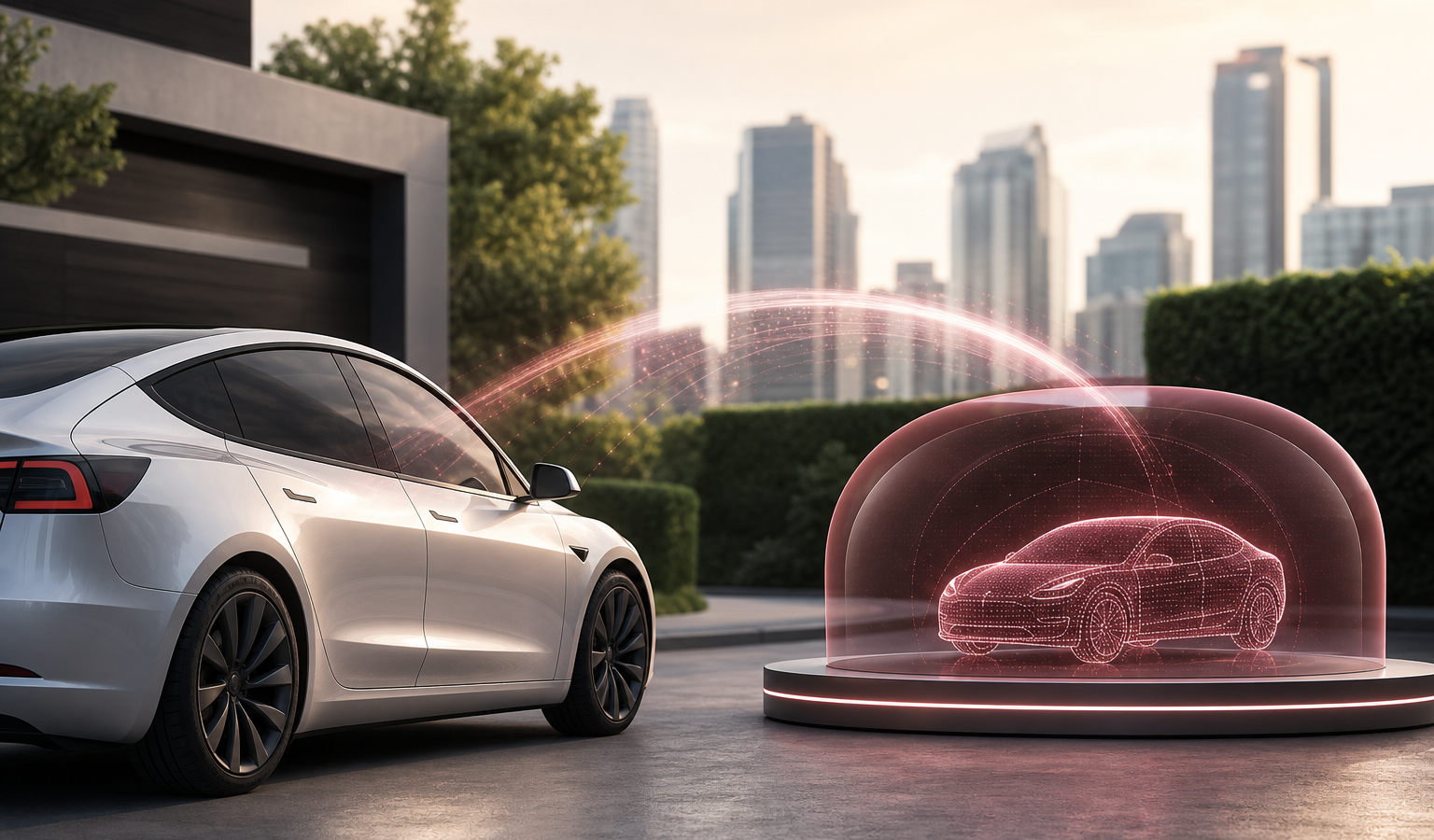
Tesla has long described a future in which owner-operated vehicles could become part of a shared robotaxi network. During its latest third-quarter earnings call, the company gave that idea a more specific timeline, saying customers will be able to add their own vehicles to the robotaxi fleet in the second quarter of 2027.
The update comes alongside Tesla’s broader push to expand its autonomous driving plans. The company said it expects to start selling its Cybercab by the end of the year, even as federal regulators investigate whether the vehicle meets safety standards. The gold-hued, autonomous two-seater is designed without a steering wheel or other traditional controls, making it one of Tesla’s most visible attempts to move beyond conventional car design.
A more concrete timeline
For years, Tesla and Elon Musk have suggested that owners would one day be able to let their vehicles operate as part of a robotaxi service. The difference this time is that Tesla tied the promise to a specific release window. According to Tesla vice president for autonomous driving Ashok Elluswamy, owners should be able to add their vehicles to the network in the second quarter of 2027.
That timeline is notable because it shifts the idea from a general aspiration into a near-term product plan. The company did not describe a broad launch for all owners immediately, but the new target suggests Tesla is at least mapping out the software and platform work needed to support outside vehicles in the fleet.
Software compatibility is the key question
One reason Tesla can make this claim is the company’s view that the software for Cybercabs and Model Y is the same. On the earnings call, Elluswamy said Tesla expects to release the same software as part of the V15 release, indicating a path for software commonality across different vehicle types.
That detail matters because a shared software stack would be central to any system that allows customer vehicles to participate in a robotaxi service. If Tesla can use similar software across its own purpose-built Cybercab and existing consumer vehicles, it could simplify how the company expands the network. But the company has not yet demonstrated that the plan works in practice at scale, and it remains unclear how the rollout would function for owners with different vehicle configurations.
Regulatory scrutiny remains in the background
Even as Tesla talks about expansion, the company is operating under regulatory scrutiny. TechCrunch reported that federal regulators are investigating whether the Cybercab meets vehicle safety standards. That matters because the vehicle’s design removes traditional controls, raising obvious questions about compliance and deployment.
Those questions are especially relevant given Tesla’s repeated emphasis on unsupervised autonomous driving. The company’s future fleet plans depend not only on software progress, but also on whether the vehicles and systems meet the standards needed for broader road use.
What the announcement does and does not answer
Tesla’s new timeline gives the robotaxi idea a clearer schedule, but it leaves several important details unresolved. The company did not say how many customer vehicles could be added, what hardware requirements would apply, or how Tesla would manage the process for owners who want to participate.
It also did not explain how the Cybercab’s arrival by the end of the year fits with the more distant second-quarter 2027 goal for customer-owned vehicles. Those two milestones suggest Tesla is pursuing multiple stages of autonomy at once: first a dedicated robotaxi product, then a broader network that could include customer cars.
For now, the main takeaway is that Tesla is still trying to turn a long-running promise into a defined product roadmap. The company has set a timeline, linked it to its software plans, and paired it with a new Cybercab launch target. Whether those plans become a working robotaxi network will depend on execution, software maturity, and regulatory outcomes that are still unsettled.
Conclusion
Tesla’s latest comments do not prove that customer vehicles will soon be driving in a robotaxi fleet, but they do make the company’s intentions more concrete. By pointing to the second quarter of 2027 and connecting that goal to shared software for Cybercabs and Model Y vehicles, Tesla has given the idea a firmer outline. The remaining challenge is turning that outline into a system that is safe, compliant, and ready for real-world use.