
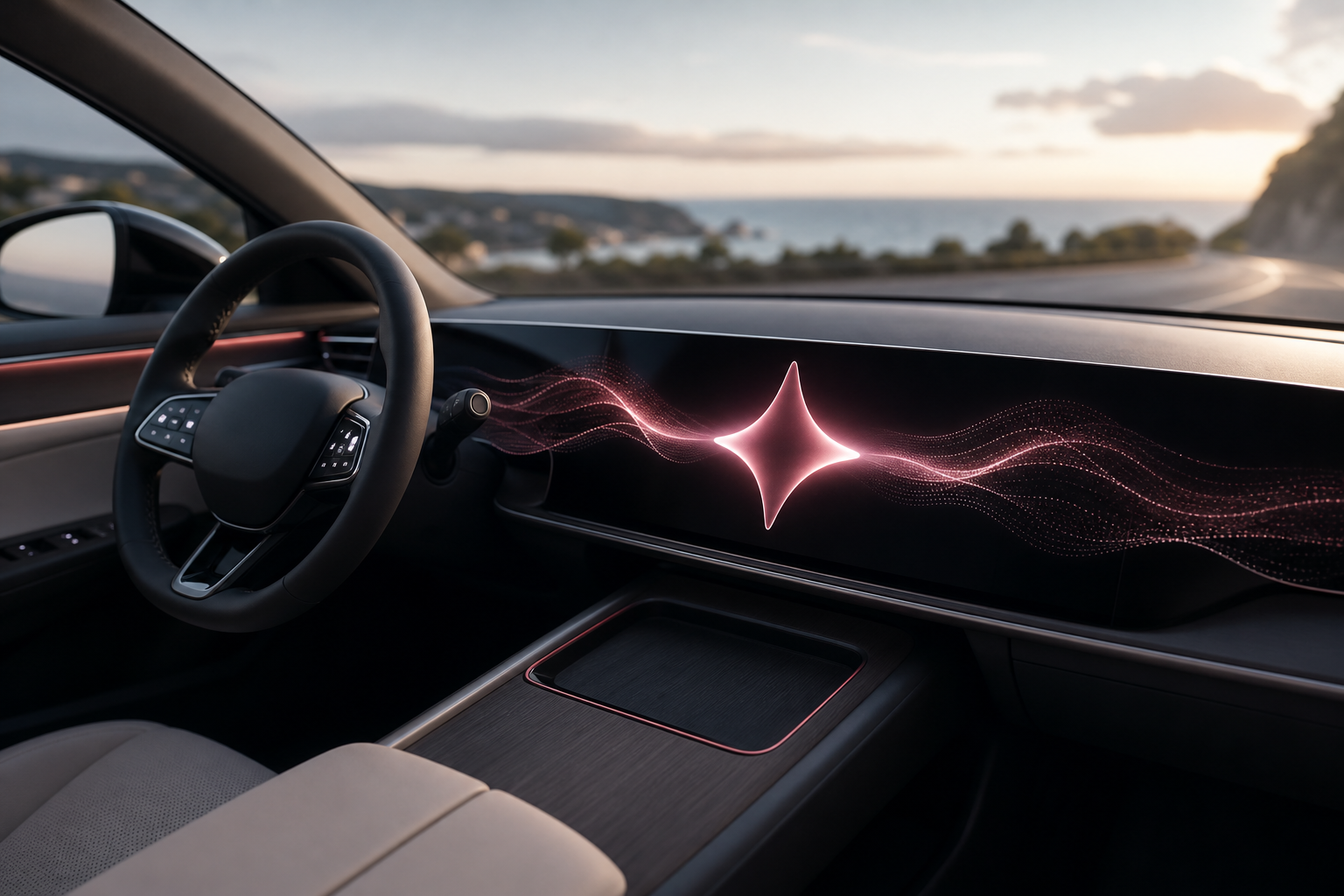
Google is bringing a more personalized version of its Gemini AI assistant to cars, extending its Personal Intelligence feature to Android Auto and vehicles with Google built-in. The update is designed to let the assistant use information across Google services so drivers can ask for help in a more conversational way while staying focused on the road.
The move builds on Gemini’s role as a general-purpose assistant and gives it access to a user’s own Google ecosystem in the car. Rather than relying only on short, generic voice commands, the assistant can now draw on relevant details already stored in Google apps to answer questions and help with everyday driving tasks. That makes the experience feel more connected to the user’s schedule, travel plans, and saved content.
How Gemini’s personal intelligence works in the car
According to the supplied source material, Gemini in Android Auto and in cars with Google built-in can tap into information from Google apps including Gmail, Calendar, Maps, Photos, YouTube, and Search. That means the assistant can combine a user’s own data with general web information to deliver more relevant responses. The feature is presented as part of Google’s broader effort to make Gemini more useful in real-world situations where context matters.
One example given by Google is asking Gemini about a flight status while driving to the airport. In that case, the assistant can find the flight details in a Gmail confirmation message and then use those details to check the status. The result is a more natural interaction than manually searching through an inbox or entering trip details by hand. It also reduces the number of steps a driver needs to take while on the move.
Driving tasks become more conversational
The new capability is also meant to make everyday navigation requests easier. Instead of opening maps and entering an address manually, a driver can ask Gemini to “take me to my doctor’s appointment.” The assistant can interpret the request and act on the information it already has access to through Google services. In that sense, the interaction becomes less about precise commands and more about expressing intent in plain language.
Another example from the source material is asking Gemini to “find the car wash from the photo I took.” That kind of request shows how the assistant can use stored personal information and content from Google apps to help with tasks that would otherwise require multiple steps. The feature is especially relevant in a car, where convenience and reduced distraction are central goals.
These examples suggest that Gemini is being positioned as a more capable in-car companion rather than a simple voice input tool. By using what it already knows from the user’s Google account, the assistant can respond to requests that depend on memory, location, or past activity. That makes the experience feel more personal without changing the basic way drivers interact with the system.
Why this matters for in-car AI
The update highlights how in-car assistants are shifting from simple voice commands toward more context-aware help. A system that can pull from email, calendar entries, maps data, photos, and search results is better positioned to answer requests that depend on a driver’s own schedule, location, or saved information. In practice, that means the assistant can provide assistance that feels tailored to the moment instead of detached from the driver’s actual needs.
For Google, the feature also reinforces Gemini’s role as a central assistant across devices. By bringing Personal Intelligence into the car, the company is connecting in-vehicle voice assistance with the broader Google ecosystem that many users already rely on throughout the day. The car becomes another place where the same account-based context can be used to make interactions faster and more relevant.
This approach also underlines the importance of continuity across devices. A driver may already have an email, a calendar entry, a photo, or a search result saved in Google services, and Gemini can use that information without making the user restate everything from scratch. That continuity is what gives the update much of its practical value.
What drivers can expect
The supplied sources do not list a broader rollout schedule or additional device details beyond Android Auto and cars with Google built-in. Even so, the update suggests a stronger emphasis on personalization, with Gemini moving beyond generic answers and into context-specific assistance based on a user’s Google account activity. The feature is framed as an extension of what Google already offers, rather than a separate assistant with a different identity.
In practical terms, that could mean fewer manual steps when checking travel details, finding destinations, or turning a memory into a navigation task. The assistant’s value comes from using existing information the driver has already shared with Google services, rather than requiring every request to start from scratch. That makes the interaction more efficient and more closely tied to real-life driving needs.
It also suggests that the assistant may be most helpful when the request is connected to information Google already has access to, such as an upcoming appointment, a saved photo, or a trip confirmation. The supplied material emphasizes those kinds of scenarios, showing how the feature is meant to make common tasks easier without adding complexity for the driver.
Conclusion
Google’s move to bring a more personal Gemini AI assistant to cars shows how voice AI is evolving inside vehicles. With access to Gmail, Calendar, Maps, Photos, YouTube, and Search, Gemini can respond with more relevant help in situations that often come up on the road. The result is a car assistant that is less about basic commands and more about understanding the driver’s own context.
As described in the supplied source material, the update centers on Personal Intelligence and on making responses feel more useful in everyday driving situations. The overall direction is clear: Google wants Gemini to be a more conversational, context-aware assistant in the car, not just a voice interface for simple tasks.